
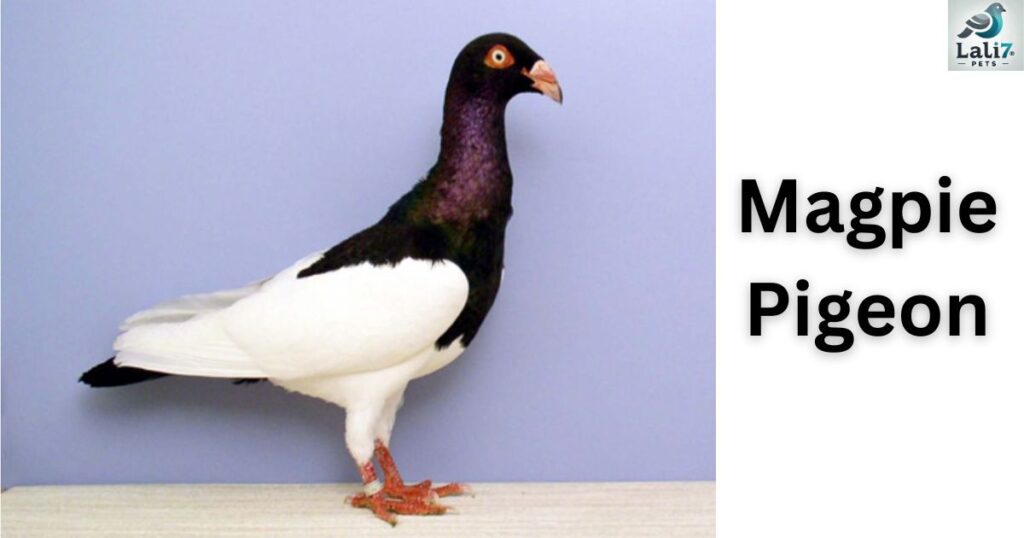
Elegance, poise, and striking contrast define the English Magpie Pigeon. Often hailed as the “Queen of Pigeons” by dedicated fanciers, this breed commands attention not through size, but through its refined silhouette and impeccable markings. Unlike the scavengers found in city squares or the corvid magpies that patrol suburban gardens, this bird is a masterpiece of selective breeding, honed over a century to achieve perfection in form and feather.
For the uninitiated, the name often causes confusion. This is not a hybrid of a magpie and a pigeon, nor is it related to the intelligent, thieving corvid family. It is a distinct breed of fancy pigeon, a direct descendant of the Rock Pigeon (Columba livia), transformed by human stewardship into an exhibition icon. Whether you are an aspiring exhibitor, a curious bird lover, or someone seeking a unique avian companion, understanding the Magpie Pigeon requires a deep dive into its storied past and sophisticated care requirements.
- 1. Introduction to the English Magpie Pigeon
- 2. History and Origin: Tracing the English Magpie's Pedigree
- 3. Distinctive Physical Characteristics and Appearance
- 4. Temperament and Behavior: The Amiable Flyer
- 5. Care and Loft Management for English Magpie Pigeons
- 6. Breeding English Magpie Pigeons
- 7. English Magpie Pigeons in Exhibitions and Shows
- 8. Understanding "Magpie vs. Pigeon" Interactions
- Frequently Asked Questions
- 9. Conclusion: The Enduring Charm of the English Magpie Pigeon
1. Introduction to the English Magpie Pigeon
1.1. What is a Magpie Pigeon?
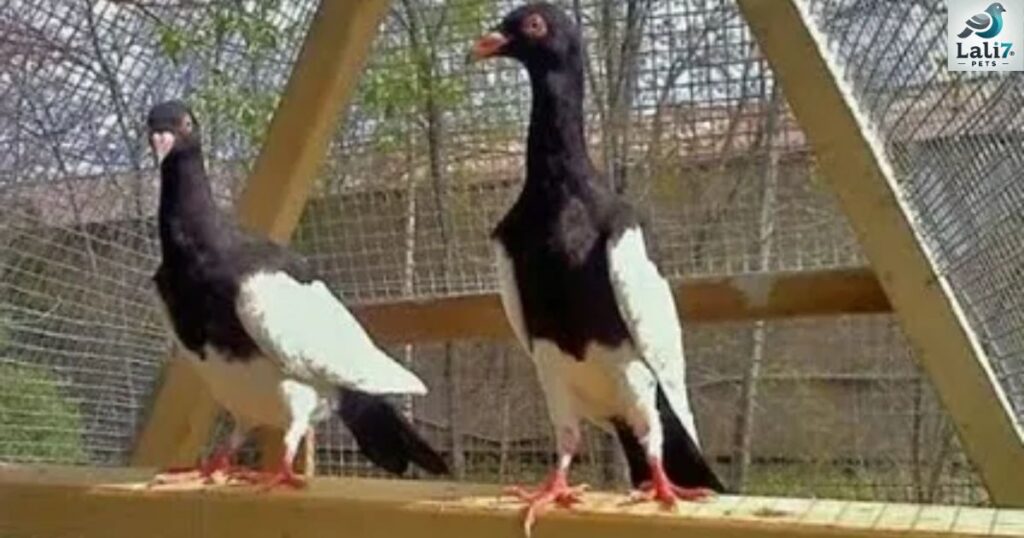
The English Magpie pigeon stands as a testament to the art of aviculture. It belongs to the vast family of domesticated pigeons, specifically categorized within the tumbler and highflyer group, though it is rarely flown for performance today. The breed is defined by its specific marking pattern—a colored head, neck, breast, back, saddle, and tail set against a pristine white body and wings. This high-contrast plumage mimics the European Magpie, giving the breed its name, but the similarities end there.
1.2. Why the “Queen of Pigeons” Title?
Fanciers bestowed the title “Queen of Pigeons” upon this breed because of its ladylike elegance. While other breeds might be bulky (like the King Pigeon) or adorned with excessive feathering (like the Fantail), the Magpie relies on clean lines. It possesses a slender erect stature, standing tall on legs that support a body tapering gently to the tail. The bird carries itself with a refined dignity that captivates judges in the show ring.
1.3. A Brief Overview of its Unique Appeal
Beyond its beauty, the Magpie appeals to enthusiasts because of its challenge. Breeding a bird with perfect markings—where the “cut” between white and color is razor-sharp—is notoriously difficult. This makes the English Magpie pigeon breed a favorite for competitive breeders who enjoy the genetic puzzle of producing a champion.
2. History and Origin: Tracing the English Magpie’s Pedigree
2.1. From Germany to England: The Tumbler Roots
The journey of this breed began not in the UK, but in continental Europe. Its ancestors were the German Magpie pigeons, specifically the Elster Tummler. These early birds were performance flyers, known for their aerial acrobatics and tumbling abilities. They were smaller, stockier, and bred primarily for their prowess in the sky rather than their posture in a pen.
2.1.1. The German “Elster Tummler”
The original Elster Tummler possessed the signature markings we see today but lacked the modern English Magpie’s reach and refinement. Imported to England in the 19th century, these birds captured the imagination of British fanciers, who saw potential beyond the flying kit.
2.1.2. Early Development and European Influence
As the birds established a foothold in the UK, a divergence occurred. While German breeders continued to focus on the tumbler varieties and their flying capabilities, English breeders became obsessed with the bird’s aesthetic form. They sought to elongate the body and refine the head, moving away from the “toy pigeon” look of the original imports.
2.2. The Evolution of the English Standard
The transformation from a tumbling flyer to a high-stationed show bird did not happen by accident. It was the result of aggressive and visionary selective breeding protocols established in the late 1800s.
2.2.1. Frank Warner’s Vision: The Desire for Style
Frank Warner, a prominent figure in the breed’s history, championed the idea of a more stylish bird. He and his contemporaries wanted a pigeon that was not just marked correctly, but built elegantly. They envisioned a bird with a “snakey” head and a long, sweeping neckline.
2.2.2. The Role of Outcrosses (Bagdad Pigeon)
To achieve this radical change in body type, breeders introduced the Bagdad pigeon (specifically the French Bagdad) into the bloodline. The Bagdad pigeon outcross provided the crucial height, length of neck, and the pear-shaped body structure. This genetic infusion stretched the stocky German tumbler into the modern English Magpie, sacrificing tumbling ability for exhibition beauty.
2.2.3. Formation of the UK Club and Early Standards
By 1883 and 1885, breeding standards were formalized. The formation of specialist clubs solidified the breed’s direction, emphasizing the long flesh-colored beak, the specific eye color, and the sharp demarcation of plumage.
2.3. Global Spread: Magpies in America and Beyond
The English Magpie pigeon eventually crossed the Atlantic, finding a passionate following in the United States. American breeders adhered strictly to the English standard, maintaining the bird’s status as a top-tier exhibition breed. Today, distinct populations exist globally, but all look back to the English refinement of the late 19th century as the gold standard.
3. Distinctive Physical Characteristics and Appearance
3.1. Size and Stature: Medium to Large, Slender and Erect
An exhibition-quality Magpie is a medium-sized bird, typically weighing between 10 to 12 ounces. However, weight is less important than shape. The bird must exhibit a slender erect stature, standing high on its legs with a long, graceful neck. The body should taper gradually from the shoulders to the tail, often described as “wedge-shaped.”
3.2. The Iconic Coloration: The Magpie Pattern
The plumage is the breed’s calling card. The standard demands a white body colored markings distribution that is strictly defined.
- The White: The wings, lower breast, belly, thighs, and legs must be pure white.
- The Colored: The black head neck back breast saddle tail (or other colors) must be rich and saturated.
- The Cut: The most critical feature is the line where white meets color on the breast. This line must be a sharp, clean horizontal cut, located roughly at the top of the wing butts. Irregularities here are heavily penalized in shows.
3.3. Color Varieties: Beyond the Black
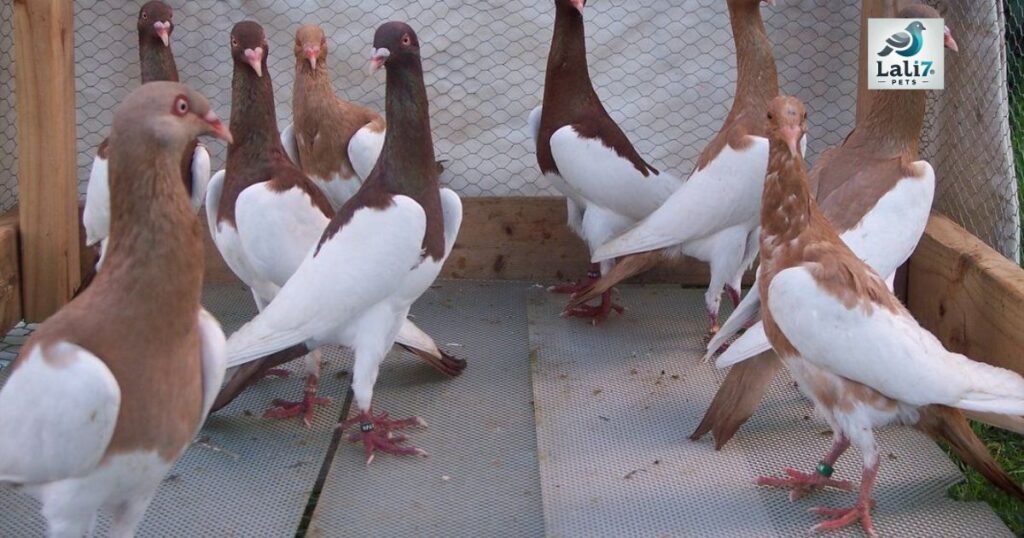
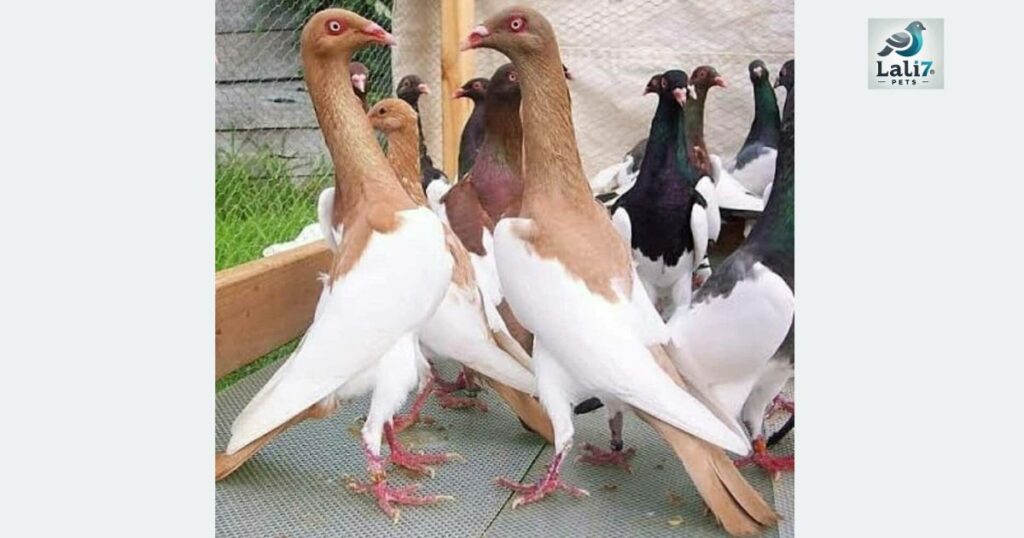
While the Black Magpie is the most iconic, showcasing an iridescent metallic sheen (often green or purple) on the feathers, the breed comes in several recognized mutations.
- Standard Colors: Magpie pigeon colors include Yellow, Red, Blue, Dun, and Silver.
- Barred Varieties: The Blue and Silver varieties are unique because they possess black tail bars, adding another layer of contrast to the tail feathers.
- Recessive Reds: Intense, deep red coloration is highly prized but difficult to perfect without “rust” or fading.
3.4. Head and Beak: Long, Slender, and Flesh-Colored Legs
The head should be long and thin, showing no angularity—often termed a “snakey” head. The beak is long, thin, and nearly white or flesh-colored, regardless of the feather color. This long flesh-colored beak contributes to the bird’s delicate facial expression. The eyes are a pearl white (fish eye) with a small, fine pupil.
3.5. Comparative Features with Other Fancy Pigeons
Compared to a Homer, the Magpie is finer and taller. Compared to a Fantail, it is streamlined. It shares some structural similarities with other “high-stationed” breeds like the Maltese, but retains the sleek feathering of the tumbler varieties.
4. Temperament and Behavior: The Amiable Flyer
4.1. Docile and Calm Nature: Ideal for Beginners
One of the reasons the Magpie remains popular is its personality. They possess a calm docile temperament, making them easy to handle. Unlike some high-strung breeds that panic in the loft, Magpies are generally steady, which simplifies the process of Magpie pigeon care guide implementation for novices.
4.2. Social Birds: Coexisting with Other Breeds
As a social pigeon breed, Magpies integrate well into mixed lofts. They are rarely aggressive toward other birds, although males will naturally defend their specific nest box territory. Their gentle nature allows them to be kept alongside other non-aggressive fancy breeds.
4.3. Flying Ability: Hardy and Strong Flyers
Despite being bred for the show pen, the English Magpie pigeon breed remains a hardy strong flyer. While they no longer perform the rapid tumbling of their ancestors, they enjoy free flight and exercise. However, because of their value and susceptibility to raptor attacks due to their bright markings, many breeders keep them in aviaries.
4.4. Intelligence and Trainability
These birds are intelligent and can be tamed easily. They quickly learn feeding schedules and recognize their caretakers. While not used for carrying messages like the Carrier Pigeon, their homing instinct is intact, meaning if they escape, they usually attempt to return to the loft.
4.5. Pet Potential: Why Magpie Pigeons Make Great Companions
For those seeking a pet, the pet potential Magpie pigeon score is high. They are quiet, clean (with proper husbandry), and can become quite affectionate, often perching on their owner’s shoulder or hand if hand-raised.
5. Care and Loft Management for English Magpie Pigeons
5.1. Housing Requirements: Creating the Ideal Environment
Pigeon loft management is the cornerstone of a healthy flock.
- Loft Design: The loft should be spacious. Because Magpies are tall, perches should be positioned to allow their tails to clear the floor. Box perches are ideal to prevent feather soiling.
- Ventilation: Good airflow is non-negotiable to prevent respiratory issues, but drafts must be avoided.
- Predator Protection: The loft must be fortified against rodents, cats, and wild birds.
5.2. Nutritional Needs: A Balanced Diet for Health
A robust Magpie pigeon diet consists of a high-quality commercial mix containing peas, corn, wheat, and milo.
- Protein: Essential during the breeding and molting seasons.
- Grit: Pigeons need grit to digest their food.
- Fresh Water: Must be available at all times.
- Supplements: Vitamins and minerals should be added to the water or grit, especially calcium for egg-laying hens.
5.3. Health and Wellness: Preventing Common Ailments
Vigilance prevents tragedy. Owners must watch for pigeon health issues such as Canker (Trichomoniasis), Coccidiosis, and respiratory infections.
- Vaccination: Vaccinating against Paramyxovirus (PMV) is essential for any keeper.
- Parasite Control: Regular treatment for lice, mites, and worms ensures the bird’s plumage remains show-ready.
5.4. Grooming and Hygiene
Exhibition birds require bathing water regularly to keep their white feathers pristine. Before a show, owners may need to gently wash the bird’s legs and beak.
5.5. Lifespan of the English Magpie Pigeon
With excellent care, the Magpie pigeon lifespan ranges from 10 to 15 years. Some exceptional individuals have lived even longer, providing companionship for over a decade.
6. Breeding English Magpie Pigeons
6.1. Becoming a Reliable Breeder: Characteristics and Selection
Breeding champions requires patience. One must select reliable breeders parents that exhibit the best traits of the standard. This involves balancing visual characteristics—pairing a bird with a slightly too-long beak with one that has a perfect beak, for example.
6.2. Mating and Nesting Behaviors
Magpies mate for life (usually). Once paired, the male will drive the hen to the nest. They are generally good sitters.
6.3. Raising Squabs: From Hatching to Fledgling
After 18 days of incubation, the eggs hatch. Magpie pigeons are typically excellent parents, feeding their young “pigeon milk” diligently. However, because the beak is long, some highly refined show strains may struggle to feed squabs initially. In such cases, breeders might use “foster” parents (usually Homers or Rollers) to raise the Magpie pigeon chicks.
6.4. Genetic Considerations and Maintaining Breed Standards
Breeding for the perfect marking is a game of percentages. Mismarked birds are common. These birds, while not suitable for showing, may still carry valuable genetic structural traits and can be useful in the breeding program.
7. English Magpie Pigeons in Exhibitions and Shows
7.1. The World of Fancy Pigeons
The show hall is the arena where the English Magpie pigeon breed shines. Thousands of birds are cooped and evaluated by certified judges.
7.2. Judging Criteria and Standards
Judges evaluate the bird on a point system:
- Head and Beak: Smoothness and length.
- Body and Carriage: Slimness and height.
- Markings: The accuracy of the black (or colored) distribution.
- Color: The richness and sheen of the feathers.
7.3. Preparing Your Magpie for Show
Preparation begins weeks in advance. This involves “pen training” the bird so it stands calm and erect when the judge approaches. Feathers are inspected for damage, and the bird is fed a diet to maximize glossiness.
8. Understanding “Magpie vs. Pigeon” Interactions
8.1. Distinguishing the Corvid Magpie from the Pigeon Breed
It is crucial to separate the English Magpie pigeon breed from the Eurasian Magpie (Pica pica). The latter is a wild corvid, known for its intelligence and scavenging nature. The former is the subject of this guide—a domesticated variety of Columba livia.
8.2. Magpie Predation: Do Magpies Steal Pigeon Eggs?
A common query involves magpie predation pigeon eggs. Yes, wild magpies (the corvids) are opportunistic predators. If a pigeon loft is open or if feral pigeons nest in the open, wild magpies will steal eggs and young squabs. This natural behavior of the corvid often confuses people looking for information on the pigeon breed.
8.3. Territoriality and Competition
Magpie territoriality (referring to the wild bird) is high. They will harass pigeons for food sources and nesting sites. Conversely, the English Magpie pigeon is not territorial outside of its immediate nest box and is ill-equipped to fight off a wild magpie attack.
Frequently Asked Questions
What is an English Magpie pigeon?
An English Magpie pigeon is a breed of fancy pigeon developed in England from German tumbler stock. It is bred primarily for exhibition, characterized by its slender body, long neck, and distinctive black-and-white (or other color) markings that resemble the wild magpie bird.
What does an English Magpie pigeon look like?
They have a slender erect stature and a “snakey” head. Their defining feature is the color pattern: the head, neck, breast (up to the wing butts), back, saddle, and tail are colored, while the rest of the body, including the wings and belly, is white. They have a long flesh-colored beak.
Are English Magpie pigeons good pets?
Yes, they have excellent pet potential. They are known for a calm docile temperament, are relatively quiet, and can be tamed to sit on hands or shoulders. They require less space than larger poultry but need a secure loft.
What is the origin of the English Magpie pigeon?
The breed originated from the German Magpie (Elster Tummler) in the 19th century. British breeders refined the bird using selective breeding and outcrossing with the Bagdad pigeon to create a taller, more elegant bird.
How big do English Magpie pigeons get?
They are medium-sized pigeons, typically weighing between 10 to 12 ounces. However, their height and long neck make them appear larger and more graceful than common feral pigeons.
What colors do English Magpie pigeons come in?
While Black is the most famous, Magpie pigeon colors include Blue, Silver, Dun, Yellow, Red, and Cream. The colored areas should be rich and often possess an iridescent metallic sheen.
Do magpies (the bird) attack pigeons or their eggs?
Yes, wild magpies (corvids) are predators and will eat pigeon eggs and squabs if given the chance. This is a behavior of the wild bird, not the English Magpie pigeon breed.
What is the temperament of an English Magpie pigeon?
They are gentle, active, and intelligent. While they are hardy strong flyers, in the loft, they are generally peaceful and coexist well with other breeds.
How do you care for an English Magpie pigeon?
Magpie pigeon care involves providing a dry, draft-free loft, a balanced diet of grains and seeds, grit, and fresh water. Regular health checks for parasites and canker are necessary, as is protection from predators.
What is the difference between a magpie and a pigeon?
A “magpie” usually refers to the wild corvid bird (black and white, long tail, scavenger). The “Magpie Pigeon” is a specific breed of domesticated pigeon bred to look somewhat like the wild bird in color, but it has the anatomy and behavior of a pigeon (vegetarian, coos, homes).
9. Conclusion: The Enduring Charm of the English Magpie Pigeon
The English Magpie Pigeon is a triumph of the breeder’s art. It combines the hardiness of the Rock Pigeon with a refined beauty that rivals any exotic bird. Whether viewed as the “Queen of Pigeons” in a competitive show hall or as a gentle companion in a backyard loft, this breed offers a unique blend of visual appeal and amiable character.
For the dedicated fancier, the challenge of breeding the perfect “cut” and maintaining the breed’s elegant station provides a lifetime of engagement. For the casual observer, distinguishing this fancy pigeon from its wild corvid namesake clears up confusion and opens the door to appreciating the diversity of domesticated bird life. As we move forward, the preservation of the English Magpie pigeon breed relies on responsible stewardship, ensuring that this living piece of history continues to grace our lofts with its slender silhouette and stunning contrast.