
Imagine standing in your backyard, eyes scanned upward, heart pounding in your chest. You are waiting for a tiny speck to appear on the horizon. This isn’t just bird watching; this is the high-stakes, adrenaline-fueled world of the pigeon sport. When that speck dives out of the sky and traps into the loft, clocking a victory after flying 400 miles, the feeling is indescribable.
Welcome to the fascinating world of the racing pigeon race. Whether you are a curious observer, a beginner looking to build your first pigeon loft, or a veteran looking for training tips, this guide covers everything you need to know.
We will explore the history, the science of their navigation, the training secrets of pigeon fanciers, and the modern pigeon community that keeps this ancient tradition alive.
- Introduction to Racing Pigeons Race
- Understanding the Racing Pigeon
- The Science Behind Pigeon Homing and Navigation
- Getting Started in Pigeon Racing: A Beginner's Guide
- Advanced Training and Conditioning for Race Success
- The Thrill of Race Day
- Challenges, Criticisms, and the Future of Pigeon Racing
- The Global Pigeon Racing Community and Its Impact
- Conclusion: Honoring the Legacy and Shaping the Future
- Frequently Asked Questions (FAQs)
Introduction to Racing Pigeons Race

What is Pigeon Racing?
At its core, pigeon racing is a sport involving the release of specially bred homing pigeons over a specific distance. The goal? To see which bird returns to its home loft the fastest. Unlike horse racing, where all competitors run on the same track, racing pigeons race to their own individual homes. Because every loft is located at a different distance from the release point, the winner is calculated by speed (velocity), measured in yards or meters per minute.
A Brief History and Evolution of the Sport
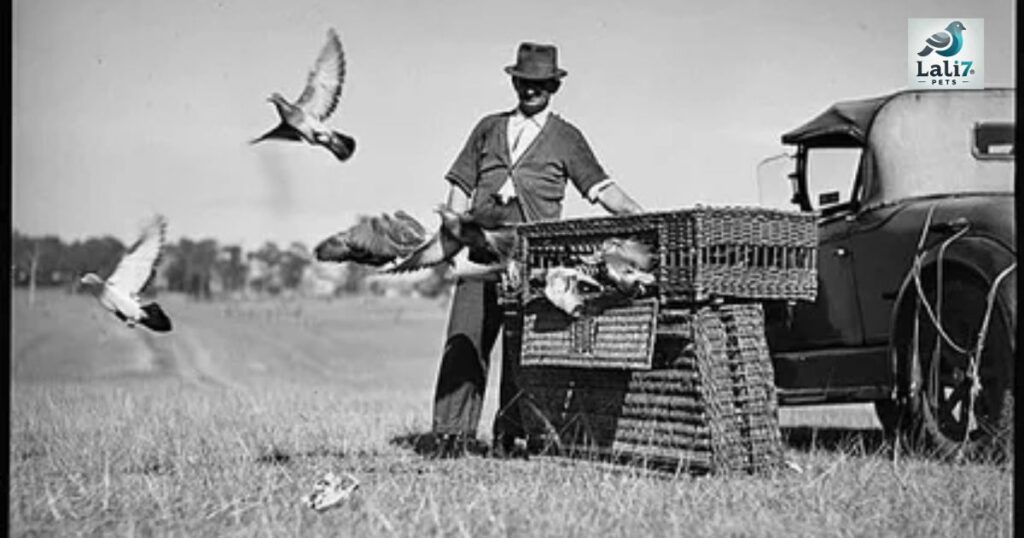
Pigeons have been man’s feathered friends for thousands of years. From the pigeon post of ancient times to the heroic war pigeons like “Cher Ami” in WWI, these birds have saved lives by carrying vital messages.
However, the sport as we know it began in Belgium in the mid-19th century. Belgian fanciers developed the Racing Homer, a breed designed specifically for speed and endurance. Today, Belgium is still considered the spiritual home of the sport, though it has exploded in popularity in China, the UK, and South Africa.
The Enduring Appeal and Global Reach of Pigeon Racing
Why do people do it? It is the unique bond between human and animal. You cannot force a pigeon to fly home; it flies home because it wants to be there. It is a test of your ability to breed, train, and motivate an athlete that performs entirely on its own, hundreds of miles away from you.
Understanding the Racing Pigeon
The Racing Homer: A Breed Apart
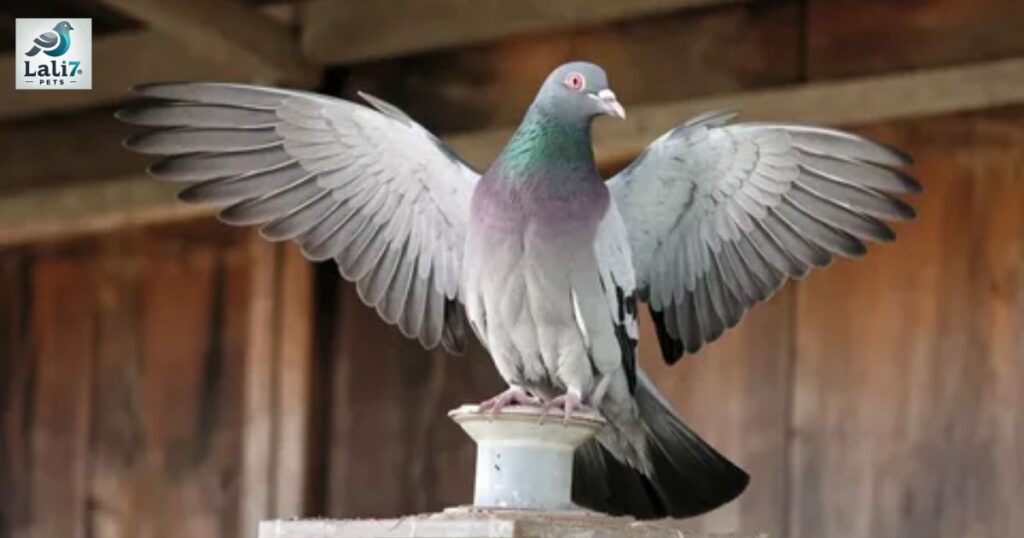
A common mistake is confusing a racing homer with the feral pigeons you see in city parks. They are as different as a wolf is to a poodle. Racing pigeons are thoroughbred athletes, selectively bred for over 150 years for stamina, orientation, and speed.
Key Traits of a Champion Racing Pigeon
What makes a winner? Pigeon enthusiasts look for three main things:
Superior Homing Instinct and Navigation Capabilities
A champion must have an unbreakable desire to return home. This internal GPS allows them to navigate unfamiliar terrain instantly upon release.
Physical Attributes for Speed and Endurance
When you hold a racer, it should feel buoyant, like a balloon. Key physical traits include:
- Muscular Wings: Strong pectoral muscles to sustain flight for hours.
- Strong Physique: A solid back and tight vents (bones near the tail).
- Feather Quality: Silky, soft feathers that reduce drag.
Mental Fortitude and Resilience Under Pressure
Races can be grueling. A bird must be smart enough to avoid predators (like hawks), navigate around storms, and push through exhaustion.
Distinguishing Racing Pigeons from Other Pigeon Varieties
While “fancy pigeons” (like Fantails or Pouters) are bred for looks, racing pigeons are bred for performance. They may look simple, but their chest muscles are significantly larger, and their eyes often sparkle with alertness—a sign of vitality often discussed in pigeon genetics.
Notable Racing Pigeons and Their Impact on the Sport
Legendary birds like “Armando,” often called the “Lewis Hamilton of pigeons,” have sold for over $1.4 million at pigeon auctions. These champions become the foundation for prestigious breeding lines, proving that pigeon breeding is a high-stakes business.
The Science Behind Pigeon Homing and Navigation
How do they do it? This is the most common question asked.
How Pigeons Find Their Way Home: Scientific Theories and Discoveries
Science suggests it is a combination of several superpowers:
- Earth’s Magnetic Field Hypothesis: Pigeons have magnetite in their beaks, allowing them to detect magnetic north. They essentially have a compass in their heads.
- Sun Compass Orientation: They use the position of the sun and their internal clock to determine direction.
- Olfactory Cues and Map Sense: Astonishingly, research suggests pigeons create an “olfactory map” of their surroundings, using smells carried by the wind to orient themselves.
- Visual Landmarks and Memorized Routes: Once they get closer to home (within 50-100 miles), they recognize highways, rivers, and buildings.
Environmental Factors Influencing Navigation
Even the best pigeon navigation systems can fail due to:
- Solar Flares: Disrupt magnetic fields.
- Weather: Rain and fog reduce visibility.
- Tailwinds vs. Headwinds: A tailwind makes for a fast race; a headwind tests endurance.
Getting Started in Pigeon Racing: A Beginner’s Guide
Starting in the sport can be daunting. Here is your roadmap.
Selecting Your First Racing Pigeons
Do not catch a barn pigeon. Buy from a reputable fancier. Look for pigeon bloodlines with a history of winning at the distance you want to race (Sprint vs. Long Distance). You are better off with 4 high-quality birds than 20 mediocre ones.
Designing and Maintaining an Optimal Pigeon Loft
Your pigeon loft is their sanctuary. If they don’t love their home, they won’t race back to it quickly.
Loft Design for Health and Performance
- Ventilation: This is rule #1. Fresh air must cycle through without creating a draft.
- Dryness: Dampness brings disease. The floor must stay dry.
- Space: Overcrowding causes stress. Allow plenty of perch space.
Essential Sanitation Practices
Clean the loft daily. Scrape droppings and ensure water bowls are sanitized to prevent pigeon diseases like Canker or Coccidiosis.
Must-Have Equipment for the Aspiring Fancier
- Pigeon Bands: Identification rings for the birds’ leg (registered with a union).
- Electronic Timing System (ETS): RFID timing creates a digital record when the bird arrives.
- Traps: Special entry doors that let birds in but not out.
Joining a Local Pigeon Racing Club or Association
You cannot race alone. You need to join a pigeon racing club to calculate distances and transport birds. Organizations like the RPRA (Royal Pigeon Racing Association) in the UK or the ARPU in the USA are great places to start.
Advanced Training and Conditioning for Race Success
Training transforms a bird into an athlete.
Foundational Training: Ranging, Routing, and Short Tosses
Young birds start by “ranging” (flying circles around the loft). Once they range for 30-60 minutes, you begin “road training.”
- Take them 2 miles away and release them.
- Increase to 5, 10, 20, and 40 miles.
- Always release them so they fly towards home.
Popular Racing Systems and Techniques
Motivation is key. Why should the bird hurry?
Widowhood System Explained
This is the most popular system for old birds. The cock (male) and hen (female) are separated during the week. They are allowed to see each other briefly before the race. The bird races home frantically to be reunited with its mate.
Natural System Approach
The birds live together and raise babies. They are raced to a specific nest condition (e.g., sitting on eggs). This is effective for very long distance races where parental instinct overrides fatigue.
Light and Darkening Systems for Young Birds
Fanciers manipulate daylight hours in the loft to delay molting (feather shedding). This keeps young birds with a full wing of feathers during the racing season.
Tailored Nutrition and Feeding Regimes
Racing pigeon feed isn’t just corn. It involves:
- Proteins: For muscle building (peas).
- Fats: For fuel (peanuts, sunflower hearts).
- Carbohydrates: For energy (maize/corn).
- Tip: Feed heavier fats for longer races.
Comprehensive Health Management
A sick bird cannot win.
- Common Ailments: Watch for respiratory infections and “One-Eyed Cold.”
- Vaccination: It is critical to vaccinate against Paramyxovirus (PMV). Consult pigeonrescue.org or a vet for advice on pigeon care.
The Thrill of Race Day
Pre-Race Preparation and Basketing
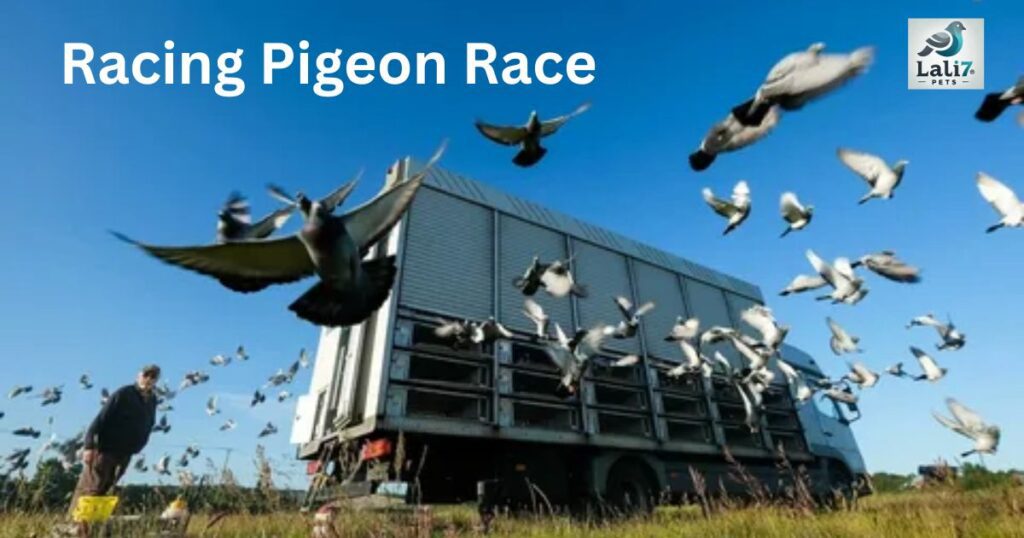
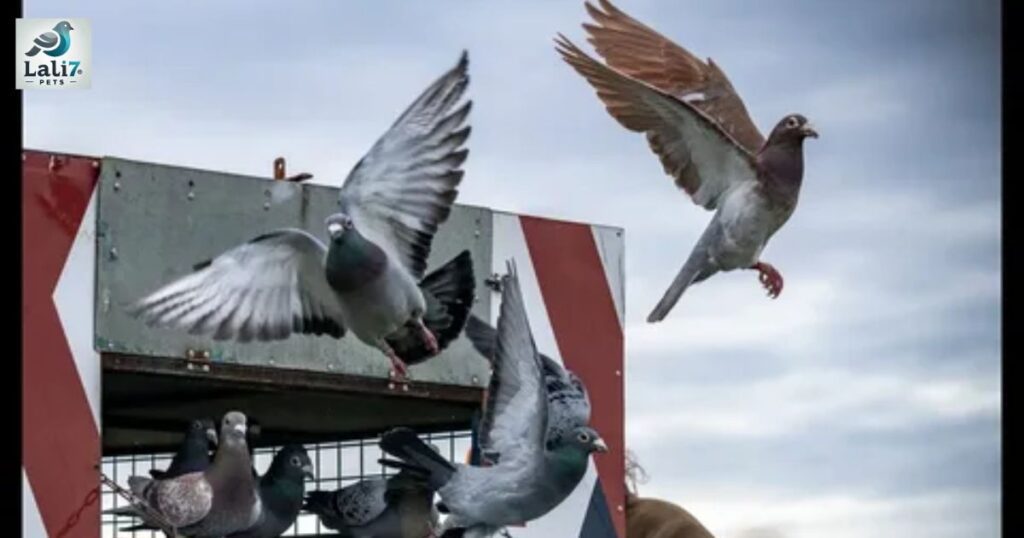
On Friday night, birds are “basketed.” They are scanned, placed in race crates, and loaded onto a transporter truck.
The Liberation: The Start of the Race
Saturday morning, the race controller checks the weather. If clear, thousands of birds are released simultaneously. This is known as “The Liberation.”
Timing and Recording Arrivals
As the bird hits the landing board, the RFID timing chip on its leg beeps. The exact time is recorded to the second.
Understanding Race Results
Because lofts are different distances, the winner is the bird with the highest velocity.
- Formula: Distance (yards) ÷ Time (minutes) = Yards Per Minute (YPM).
One Loft Racing: A Growing Trend
In One Loft Racing (OLR), breeders send their birds to a single location when they are babies. They are trained by one manager and race to the same loft. This removes the “location advantage” and purely tests the genetics of the bird.
Challenges, Criticisms, and the Future of Pigeon Racing
Ethical Debates and Animal Welfare Concerns
Like all animal sports, pigeon racing faces scrutiny regarding pigeon welfare.
Risks and Mortality Rates
Critics point to losses during races. Birds can be attacked by raptors, hit power lines, or get blown off course.
Promoting Responsible Practices
Ethical fanciers do not race sick birds or release them in bad weather. Organizations are implementing stricter weather protocols to protect the birds.
Declining Participation
The sport faces an aging demographic. However, the high-stakes money in One Loft Racing is attracting a younger, more competitive crowd.
The Economic Aspects
While some chase big prize money, most pigeon flyers do it for the love of the hobby. However, feed, vaccines, and club dues create a barrier to entry.
The Global Pigeon Racing Community and Its Impact
Major International Organizations
The FCI (Federation Colombophile Internationale) governs the sport globally.
High-Stakes Races and Pigeon Auctions
The “Barcelona International” is the marathon of the sky. Meanwhile, sites like PIPA host auctions where wealthy investors (often from China) buy pigeon champions for breeding.
Inspiring Stories
From the coal miners of England to the royalty of Belgium, the pigeon community transcends class. It is a sport where a backyard hobbyist can beat a millionaire.
Conclusion: Honoring the Legacy and Shaping the Future
The racing pigeon race is more than just a competition; it is a heritage sport that combines genetics, athletic training, and a deep respect for nature. While the sport faces modern challenges, the innovation of electronic timing, better veterinary science, and the excitement of One Loft Racing suggest the future is bright.
If you are looking for a hobby that gets you outside, connects you with a global community, and offers the thrill of the chase, look no further. Visit a local club, watch a liberation, and look to the skies.
Ready to start your journey? Connect with your local racing union today and discover why thousands call this the greatest sport on earth.
Frequently Asked Questions (FAQs)
Q: What is pigeon racing?
A: Pigeon racing is a sport where specially bred homing pigeons are released from a designated location and race back to their home lofts. The winner is determined by the highest average speed (velocity).
Q: How do racing pigeons find their way home?
A: Scientists believe they use a combination of the Earth’s magnetic fields, the position of the sun (sun compass), olfactory cues (smell), and visual landmarks to navigate.
Q: What makes a good racing pigeon?
A: A champion needs strong chest muscles, excellent feather quality, a strong back, and an intelligent, alert temperament. The most important factor, however, is the immeasurable “will to return.”
Q: Is pigeon racing cruel?
A: There are valid ethical concerns regarding pigeon welfare, primarily regarding losses due to predators or bad weather. However, responsible fanciers prioritize their birds’ health, vaccinate them, and do not race in dangerous weather conditions.
Q: What is the difference between a racing pigeon and a regular pigeon?
A: Racing pigeons (Homing Pigeons) are selectively bred athletes with larger muscles, better orientation instincts, and higher endurance than common feral (street) pigeons.
Q: How are racing pigeons timed during a race?
A: Modern racing uses RFID timing systems. The bird wears a chipped band. When it enters the loft, it crosses a sensor pad that instantly records the arrival time into a computer clock.
Q: How do you train a racing pigeon?
A: Training involves “loft flying” for fitness, followed by “tossing”—driving the birds increasing distances away from home (5, 10, 20, 50 miles) to teach them to navigate back quickly.
Q: What is “one-loft racing” in the pigeon sport?
A: One Loft Racing is a competition where breeders send young birds to a single neutral loft. All birds are raised, trained, and raced from the same location, ensuring that the best genetics win, rather than the fancier’s location.
Q: What are the common hazards racing pigeons face?
A: Hazards include birds of prey (hawks/falcons), bad weather (storms/fog), power lines, and exhaustion.
Q: Where is pigeon racing most popular globally?
A: The sport is historically rooted in Belgium, the Netherlands, and the UK, but it has seen massive growth and high-stakes investment in China and Taiwan recently.