
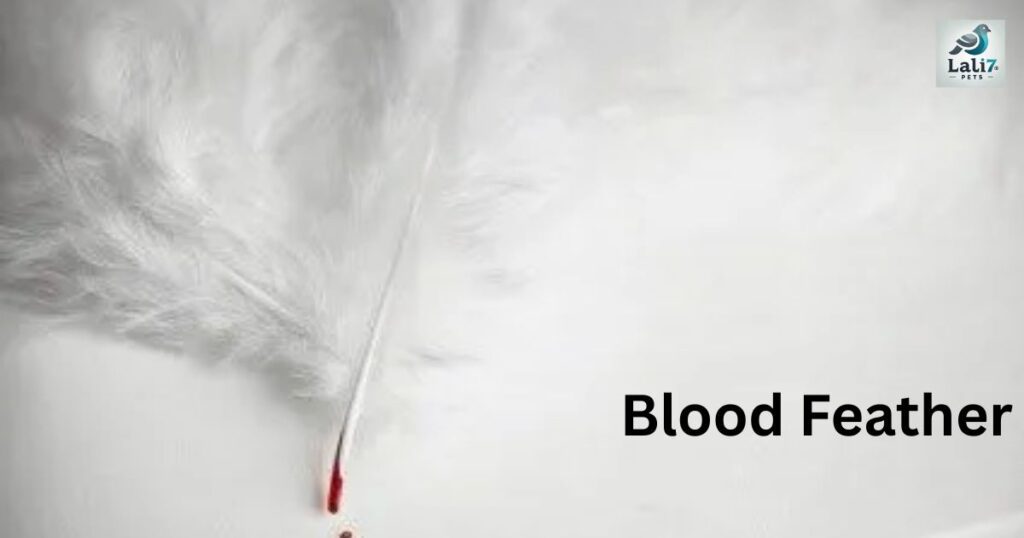
Last Updated: January 3, 2026
Seeing blood on your pet bird is one of the most terrifying experiences for an owner. Unlike dogs or cats, birds have a very small total blood volume. What looks like a minor scrape to us can be a life-threatening emergency for a cockatiel, parrot, or chicken.
Often, the culprit behind sudden, profuse bleeding is a broken blood feather.
This is not just a cosmetic issue. A damaged blood feather acts like an open faucet. Because the feather shaft is rigid, the bird’s natural clotting mechanisms often fail to close the wound on their own. Immediate human intervention is usually required to save the bird’s life.
This guide details exactly what a blood feather is, how to spot one, and the safe, step-by-step actions you must take to stop the bleeding.
What is a Blood Feather?
To understand the danger, you must understand how feathers grow. Feathers are not dead structures like hair; at least, not at first. When a new feather begins to develop during a molt, it needs a significant nutrient supply to grow.
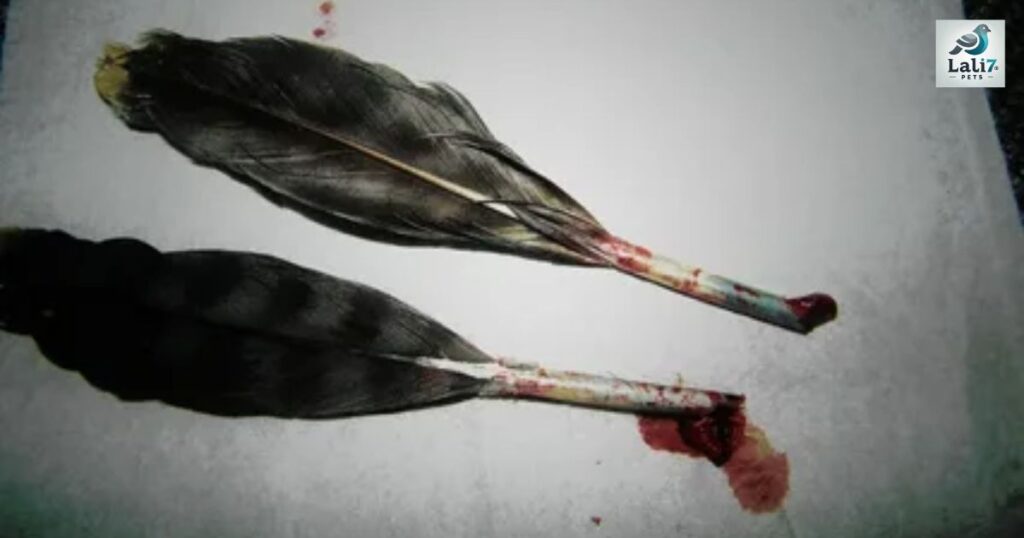
A blood feather (often called a pin feather in its early stage) is essentially a growing feather with an active blood supply flowing up through the shaft (quill). It is wrapped in a keratin sheath. Inside this shaft, an artery and a vein circulate blood to build the feather structure.
As the feather matures, the blood supply naturally recedes back into the follicle, and the shaft becomes hollow and dry. However, while the feather is still growing, the shaft is full of blood under pressure.
Blood Feather vs. Mature Feather
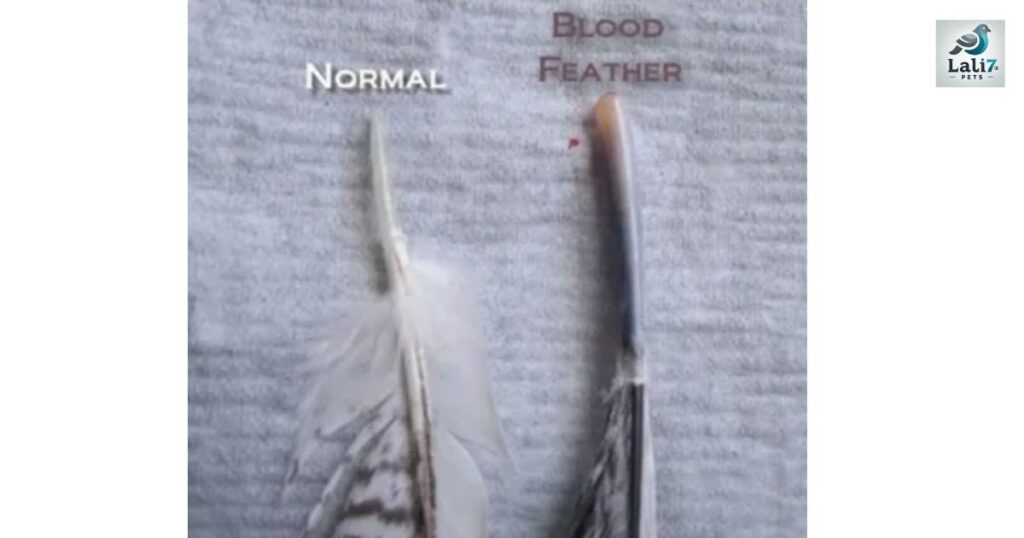
- Mature Feather: The quill is hard, clear, or white. If you cut it, it is hollow. It has no feeling.
- Blood Feather: The quill is dark (purple, blue, or red). It is fleshy and sensitive. If damaged, it bleeds profusely.
According to VCA Animal Hospitals, these feathers are most commonly found on the wings (remiges) and tail (rectrices), but they can appear anywhere on the body during a heavy molt.
Identifying the Emergency
The signs of a broken blood feather are usually unmistakable, but they can be confused with a flesh wound.
- Active Bleeding: You may see blood dripping from the wing or tail.
- Splatter: Because birds flap their wings when frightened or in pain, the blood may be sprayed around the cage walls or floor.
- Visible Trauma: If you can restrain the bird, you will see a broken, jagged quill shaft oozing blood.
- Abnormal Wing Position: The bird may hold one wing away from its body due to the pain and irritation of the broken shaft rubbing against the body.
Immediate First Aid: How to Stop the Bleeding
If you identify a bleeding feather, you must act fast. Do not wait to see if it stops on its own.
Step 1: Restrain the Bird Safely
Your bird will be panicked. A panicked bird’s heart rate increases, which pumps blood out of the wound faster.
- Use a towel to gently wrap the bird. This protects you from bites and keeps the bird’s wings from flapping, which prevents further injury.
- Caution: Do not compress the chest. Birds do not have diaphragms and need to expand their chest to breathe.
Step 2: Locate the Source
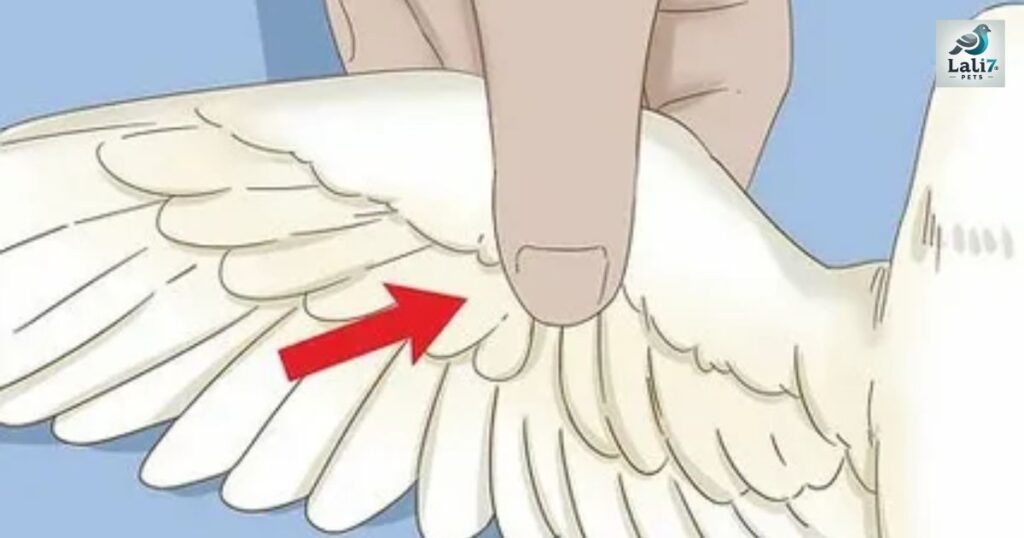
Gently extend the wing or examine the tail to find the specific feather that is damaged. You are looking for a dark, broken shaft.
Step 3: Apply Pressure and Clotting Agents
Once the specific feather is located, apply direct pressure to the tip of the broken shaft with your thumb and forefinger (or sterile gauze).
You need a coagulant to help stop the flow. Experts and veterinarians recommend keeping these in your avian first aid kit:
- Styptic Powder (Kwik Stop): The most effective commercial option.
- Cornstarch or Flour: Effective household alternatives if you don’t have medical powder.
- Bar of Soap: In a pinch, gently dragging the broken tip across a bar of mild soap can plug the hole.
Pack the powder onto the broken tip while maintaining pressure. Hold this for 1 to 2 minutes.
Step 4: Evaluate
Gently release pressure.
- If bleeding stops: Place the bird in a quiet, dark, and warm recovery cage (like a carrier). restrict movement so they don’t knock the clot loose.
- If bleeding continues: You may need to consider removing the feather or rushing to an emergency vet.
The Controversy: To Pull or Not to Pull?
For decades, the standard advice was to always pull a broken blood feather immediately. However, recent veterinary guidance has shifted.
Why you should hesitate to pull:
- Pain: Pulling a feather is agonizing for the bird and can cause shock.
- Bone Damage: The primary flight feathers are attached directly to the periosteum (bone covering). As noted by Birdy. Blog, yanking these large feathers can permanently damage the follicle or even fracture the delicate wing bone.
- More Bleeding: Pulling the feather leaves an open hole in the skin (the follicle), which may bleed even more than the broken shaft.
Current Consensus: Try to stop the bleeding with clotting powder and pressure first. If the bleeding stops, leave the feather alone and see a vet. The vet can decide if removal is necessary under anesthesia or pain management.
When you MUST pull the feather: If the bleeding is profuse and refuses to stop with pressure, or if the broken portion is dangling and whipping around (causing the bird to panic and reopen the wound), you may have to remove it to save the bird’s life.
How to Remove a Blood Feather (Emergency Only)
If you cannot get to a vet and the bleeding is life-threatening, follow these steps provided by Hagen Avicultural Research Institute:
- Stabilize the Wing: Have a helper hold the bird. Use one hand to firmly support the wing bone and skin at the base of the feather. This support is critical to prevent wing damage.
- Grip the Base: Use needle-nose pliers, tweezers, or hemostats. Grip the feather shaft as close to the skin as possible. Do not grip the tip.
- Pull Straight: In one smooth, swift motion, pull the feather straight out in the direction of its growth. Do not wiggle it. Twisting can tear the follicle.
- Apply Pressure Immediately: Once the feather is out, pinch the empty follicle (the hole in the skin) immediately. Apply styptic powder or cornstarch to the skin.
- Monitor: Watch for bleeding from the skin.
Warning: If the follicle continues to bleed after removal, this is a dire emergency. Apply pressure and drive to the vet immediately.
Prevention: Keeping Feathers Healthy
While accidents happen, you can reduce the risk of broken blood feathers.
1. Manage Molting
Birds are most vulnerable during a molt. During this time, they have many sensitive pin feathers. Ensure your bird’s diet is rich in calcium and protein to support strong feather growth. Supplements or high-quality pellets are essential.
2. Cage Safety
Inspect the cage for hazards.
- Spacing: Ensure bar spacing is appropriate so wings don’t get caught.
- Toys: Remove frayed ropes or toys with sharp edges where a wing could get snagged.
- Perches: Ensure perches are textured and varied to provide a good grip, reducing falls.
3. Prevent Night Frights
Cockatiels and finches are prone to “night frights,” where they panic in the dark and thrash against the cage bars, breaking feathers.
- Night Light: Leave a small night light on near the cage.
- Covering: Cover the cage partially, not fully, so they don’t feel trapped in total darkness.
4. Wing Clipping Caution
Improper wing clipping is a major cause of blood feather issues. If heavy flight feathers are cut, but growing blood feathers are left exposed without the protection of mature feathers around them, they break easily. As noted by The Spruce Pets, always check for blood feathers before clipping wings. Never clip a blood feather.
Post-Trauma Care
After a bleeding incident, your bird needs recovery time.
- Hospital Cage: Move the bird to a smaller, “hospital” setup where they cannot climb or flap vigorously.
- Heat: A bird that has lost blood is prone to shock and hypothermia. Keep the environment slightly warmer than usual (around 80°F or 26°C).
- Rest: Cover the cage on three sides to reduce visual stress. Keep the noise level down.
- Hydration: Offer fresh water and high-moisture fruits (like grapes or melon) to help replenish fluids.
Even if you successfully stop the bleeding at home, a follow-up visit with an avian veterinarian is highly recommended to check for infection and ensure the follicle is healing correctly.
FAQs
Can a bird die from a broken blood feather?
Yes. Birds have very little blood. A Conure, for example, may only have a few teaspoons of blood in its entire body. Losing even a small amount can lead to hypovolemic shock and death. Immediate action to stop the bleeding is vital.
What is the difference between a pin feather and a blood feather?
They are technically the same thing. “Pin feather” usually refers to the early stage of growth where the feather is short and fully encased in the keratin sheath. “Blood feather” is the broader term for any growing feather with a blood supply. Both will bleed if cut or broken.
Should I take my bird to the vet for a broken feather?
It is always safer to see a vet. If you stopped the bleeding at home, you can schedule a non-emergency appointment to ensure no infection sets in. If you cannot stop the bleeding or if the bird seems weak and lethargic, go to an emergency vet immediately.
Does pulling a blood feather hurt the bird?
Yes, it is painful. The base of the feather is connected to nerve endings and the blood supply. This is why many experts now suggest using clotting agents first and only pulling the feather if necessary to stop life-threatening bleeding.
How long does it take for a broken blood feather to heal?
If the feather is pulled, a new one will typically begin to grow in 4 to 6 weeks during the next growth cycle. If the feather was treated with styptic powder and left in place, the bird will likely shed it naturally during the next molt.
Is it normal for birds to have blood feathers?
Yes. Blood feathers are a natural part of the molting process. Every bird will have them as they replace old feathers. They only become a problem if they are broken prematurely.
Conclusion
A broken blood feather is a common but serious emergency for bird owners. While the sight of blood is frightening, panic is your enemy. By keeping a well-stocked first aid kit containing styptic powder or cornstarch and knowing how to safely restrain your bird, you can manage the situation effectively.
Remember the golden rule of modern avian first aid: Clot first, pull only if necessary.
Always prioritize stopping the blood flow and keeping your bird calm. When in doubt or if you are uncomfortable performing these procedures, consult an avian veterinarian immediately. Your quick thinking and calm demeanor are your bird’s best defense against this bloody, but manageable, injury.