
The English Carrier pigeon is a majestic and historically significant breed of fancy pigeon that often confuses new enthusiasts. You might be looking for a bird to carry messages, but this specific breed has evolved into something quite different. This article explains exactly what this bird is and how to care for it properly.
Many people mistakenly believe this breed is still used for sending letters, but that role now belongs to the modern Homing pigeon. The English Carrier is actually an exhibition pigeon, prized for its unique appearance rather than its flying speed. It is a show bird with a rich history.
If you want to understand the “King of Doos,” you have come to the right place for expert advice. We will cover everything from their unique wattle and box beak to their specific care needs. Keep reading to become an expert on this fascinating breed.
- Introduction to the English Carrier Pigeon
- Historical Journey: From Messenger to Show Bird
- Distinctive Physical Characteristics
- English Carrier vs. Homing Pigeon: A Clear Distinction
- Temperament and Behaviour
- Care and Housing for English Carriers
- Health Issues and Specific Needs
- Breeding and Exhibition Standards
- Conclusion
- Frequently Asked Questions
Introduction to the English Carrier Pigeon

Defining the Breed
The English Carrier pigeon is a specific breed of domestic pigeon derived from the Rock dove (Columba livia). Unlike the birds you see in city parks, this breed is massive and distinct. It was developed in England but has roots tracing back to Persian birds.
It is classified as a fancy pigeon because it is bred for its physical beauty and adherence to a standard. It is not a wild bird and relies entirely on human care. Breeders have spent centuries refining its look through selective breeding.
The “King of Doos” Nickname
In the world of pigeon fanciers, this bird is affectionately known as the “King of Doos.” This nickname comes from its incredible height and regal posture. It stands much taller than the average pigeon.
The bird carries itself with a sense of pride and elegance that commands attention in any pigeon loft. Its long neck and straight stance make it look like royalty among other avian breeds. This regal nature is why it is a top contender as a show bird.
Historical Journey: From Messenger to Show Bird
Origins in the 17th Century
The history of this bird is a fascinating mix of utility and beauty. The breed we know today was developed in England during the 1600s. It was created by crossing the Persian Horseman with the Baghdad Carrier.
Originally, its ancestors were indeed used as messenger pigeons in the Middle East. They were strong fliers capable of carrying information across distances. However, English breeders began to focus more on their size and look.
The Darwin Connection
One of the most famous facts about this breed involves the scientist Charles Darwin. When Darwin was studying artificial selection for his theory of evolution, he focused heavily on the English Carrier.
He marveled at how much this breed differed from the original Rock dove. The dramatic changes in its beak and wattle proved that traits could be manipulated over time. This makes the bird a living piece of scientific history.
Transition to Exhibition
By the mid-1700s, the role of the English Carrier had shifted completely. It was no longer practical for carrying messages because it became too heavy. The development of the huge wattle also impacted its aerodynamics.
The active job of messaging was taken over by the lighter, faster Racing Homer. The English Carrier became strictly an ornamental breed. Today, they are judged solely on their beauty and conformity to breeding standards.
Distinctive Physical Characteristics
The Iconic Wattle and Beak
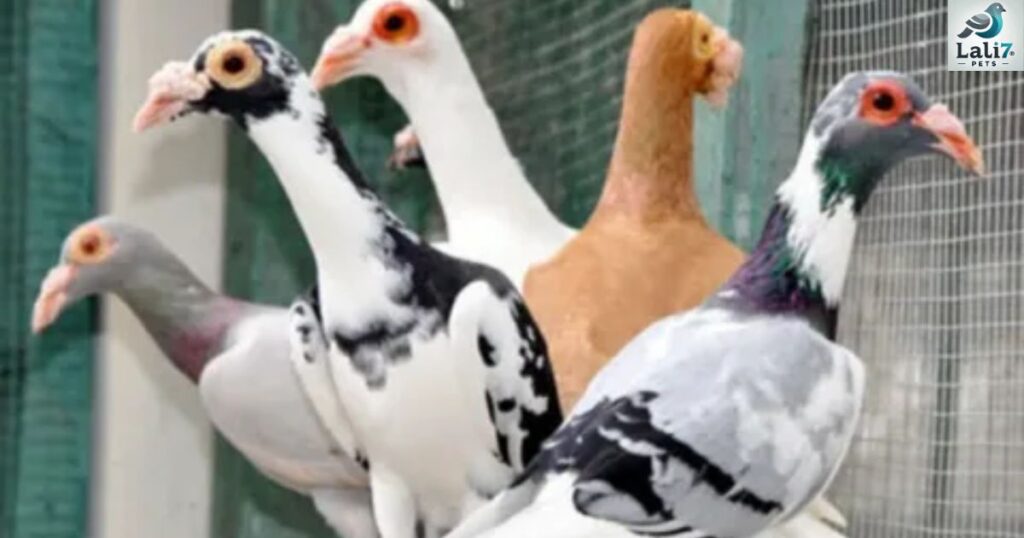
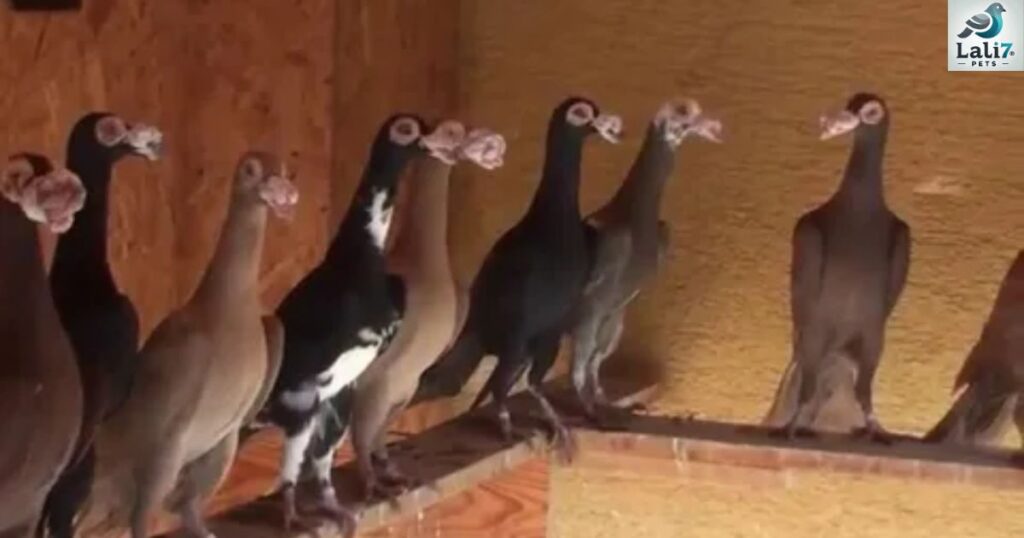
The most striking feature of this bird is the large, walnut-shaped growth on its beak called the wattle. In a high-quality show bird, this wattle is hard, rounded, and powdery white. It continues to grow as the bird ages.
Attached to this is the long, thick box beak. The upper and lower mandibles fit closely together to form a box-like shape. This beak structure is unique and separates them from almost all other domestic pigeons.
Size and Stature
These birds are giants compared to a common street pigeon. A standard English Carrier stands between 17.5 to 18.5 inches tall. They typically weigh between 20 to 23 ounces, making them heavy and solid.
They have a long, slender neck that reaches upward, giving them a vertical stance. Their legs are sturdy and, unlike some fancy breeds, are unfeathered. This clean-legged look emphasizes their height and strong posture.
Feathering and Coloration
The feathers of an English Carrier are tight and hard. This gives the bird a sleek, well-groomed appearance. Loose feathers are considered a fault in the show ring.
They come in a variety of colors including black, dun, white, blue, and pied. The eye cere, which is the ring of skin around the eye, is also very developed. It forms a wide, perfect circle that complements the large wattle.
English Carrier vs. Homing Pigeon: A Clear Distinction
Purpose and Function
This is the most common confusion for beginners. A modern Homing pigeon (or Racing Homer) is an athlete bred for speed and navigation. They are the ones used for races and ceremonial releases.
The English Carrier pigeon, despite its name, is a beauty queen, not an athlete. It is too heavy and its large wattle obstructs its vision too much for long flights. You would never use an English Carrier to send a note today.
Physical Differences
Visually, the two birds are very different. The Homing pigeon looks aerodynamic, with a smooth nose and a medium body. It is built to cut through the wind efficiently.
The English Carrier is tall, angular, and has massive growth on its beak. If you see a pigeon with a huge, cauliflower-like nose and long neck, it is a Carrier. If it looks sleek and compact, it is likely a Homer.
Temperament and Behaviour
Personality Traits
Despite their intimidating size, English Carriers are known for being calm and gentle. They are often described as “aloof” or dignified. They do not flutter around nervously like some smaller breeds.
They tend to move slowly and deliberately inside the loft. This calm nature makes them excellent pets for those who want a relaxing hobby. They rarely start fights with other birds if given enough space.
Interaction with Humans
These birds tame down very well. Because they have been bred as exhibition pigeons for centuries, they are used to being handled. They tolerate judges examining them and moving them around.
However, they are not typically “cuddly” like a parrot might be. They appreciate a routine and a calm owner. Once they trust you, they are very steady and will happily eat from your hand.
Care and Housing for English Carriers
Setting Up the Loft
Housing is critical for this large breed. You need a spacious pigeon loft because these birds cannot fly well in tight spaces. They need room to stretch their long wings and hop from perch to perch.
Ensure the loft is dry and well-ventilated to prevent pigeon health issues. Box perches should be larger than standard to accommodate their height. If the perch is too small, their tail feathers will get damaged against the wall.
Specialised Feeding Requirements
Feeding an English Carrier requires special attention due to their box beak and large wattle. As they get older, the wattle can make it difficult for them to see the grain or pick it up from a flat surface.
You should use deep feed containers. This allows them to scoop up the grain easily. A standard mix for fancy pigeons works well, focusing on peas, corn, and wheat. Ensure they always have fresh grit for digestion.
Hygiene and Maintenance
Cleanliness is vital for any Columba livia domestica, but especially for Carriers. Their large wattles can trap food particles or dirt. This can lead to infections if the loft is dirty.
Regularly scrape the floor and change the water. A dirty loft leads to a sick bird. You should also provide a bath pan with water occasionally, as pigeons love to bathe to keep their feathers in top condition.
Health Issues and Specific Needs

Managing Wattle and Eye Cere Health
The unique facial features of the English Carrier are their weak point regarding health. The deep folds in the wattle and eye cere can harbor bacteria or fungi.
Owners must inspect these areas regularly. If you notice a bad smell or discharge, you may need to clean the folds gently. Keeping the wattle dry and clean is the best prevention against infections.
Respiratory Concerns
Like many pigeons, they are prone to respiratory issues. However, because the Carrier has modified nasal passages due to the wattle, they can be more sensitive to dust.
Dust-free bedding in the loft is essential. Avoid using fine sawdust. Good ventilation that moves air without creating a draft will keep their specialized breathing system healthy.
Lifespan and Vitality
With proper care, an English Carrier can live a long life. The average lifespan is between 7 to 10 years, though some live longer. They are generally robust birds once they pass the squab (baby) stage.
Providing a balanced pigeon diet rich in vitamins helps extend their life. Regular preventative treatments for common parasites like worms and canker are also mandatory for a healthy flock.
Breeding and Exhibition Standards
Preparing for the Show
Showing your birds is the highlight of owning this breed. Preparation starts months before the show. You must ensure the bird has perfect feathers and is in peak physical condition.
Owners will often wash the bird’s feet and trim the beak slightly if it has overgrown. The eye cere should be bright and the wattle clean and white. Training the bird to stand tall in a show pen is also part of the process.
Understanding the Standards
Clubs like the National Pigeon Association (NPA) set the rules. Judges look for specific traits. They want a bird that is vertical, not horizontal.
The neck should be long and reach forward slightly. The wattle must be equal on both sides. Any bird with a crooked keel or mismatched eyes will lose points. Knowing bird anatomy helps you select the best pairs for breeding.
Conclusion
The English Carrier pigeon is a remarkable example of the power of selective breeding. It has transformed from a desert messenger into the regal “King of Doos” we see in show halls today. While they no longer carry mail, they carry a legacy that fascinated Charles Darwin and continues to captivate pigeon fanciers worldwide.
If you are looking for a bird that combines history, unique beauty, and a calm temperament, the English Carrier is a perfect choice. They require specific care regarding their housing and wattle hygiene, but the reward is owning one of the most impressive animals in the avian world. Whether for exhibition or personal enjoyment, this breed stands tall above the rest.
Frequently Asked Questions
What is the difference between an English Carrier pigeon and a Homing pigeon?
The main difference is their use and appearance. A Homing pigeon is bred for racing and flying home from long distances. An English Carrier is a show bird bred for its large size, vertical stance, and massive wattle. Carriers are too heavy and visually obstructed to race.
What does an English Carrier pigeon look like?
They are very tall birds, standing up to 18.5 inches. Their most distinct features are the large, walnut-like growth (wattle) on their beak and the thick fleshy rings (eye cere) around their eyes. They have a long neck, a stout box beak, and unfeathered legs.
Are English Carrier pigeons still used for carrying messages?
No, they are not. While their ancestors were used as messengers in the 17th century, modern English Carriers are strictly ornamental exhibition pigeons. Their large wattle and heavy body make them poor fliers compared to modern Racing Homers.
Where did the English Carrier pigeon originate?
The breed was developed in England, but its genetic roots come from the Middle East. It was created by crossbreeding the Persian Horseman and the Baghdad Carrier. British breeders refined these birds over centuries to create the standard we see today.
How do you care for an English Carrier pigeon?
They need a spacious, dry loft with large perches to accommodate their size. Because of their large wattles, you should use deep feed dishes so they can eat easily. Regular cleaning of the loft and inspection of their wattle folds to prevent infection is also required.