
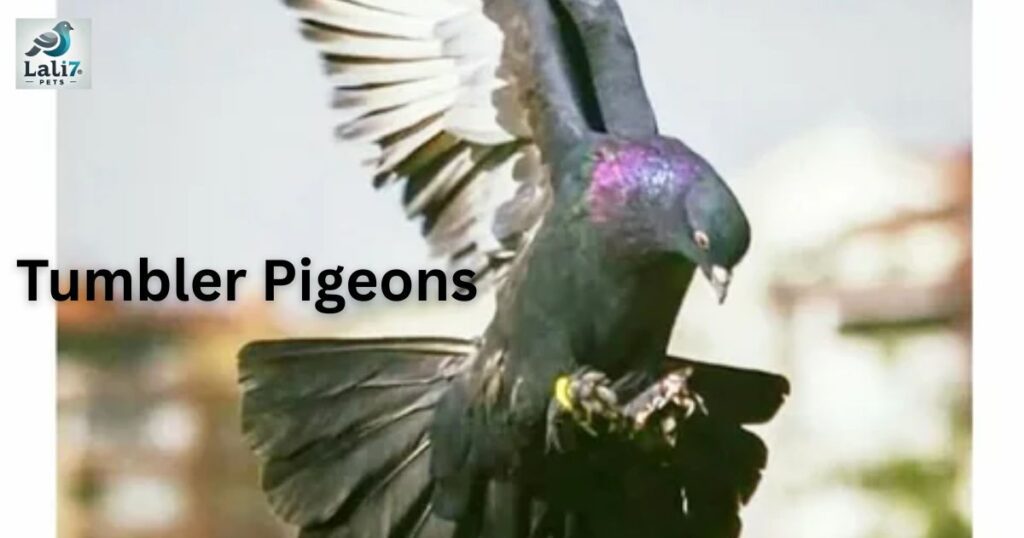
Imagine standing in your backyard, looking up at the sky, and seeing a flock of birds suddenly flip backward, spinning like acrobats before diving gracefully. You haven’t witnessed a glitch in nature; you’ve just seen tumbler pigeons in action.
For centuries, these birds have fascinated kings, scientists, and backyard hobbyists alike. Whether you are an experienced pigeon fancier or someone curious about keeping your first bird, understanding the unique history, care, and breeding of these domesticated pigeons is essential.
What Are Tumbler Pigeons?
Tumbler pigeons are a specific variety of domesticated pigeons derived from the rock dove. They are famous for their aerial acrobatics, specifically their ability to tumble or roll over backwards during flight. Unlike standard homing pigeons bred for distance, tumblers are bred for performance and style.
A History of High Flyers
The history of the tumbler is rich and ancient. This tumbling behavior isn’t a modern trick; it has been documented for centuries.
- Ancient Roots: Records suggest these birds were popular in Egypt and Persia as far back as the 14th century.
- Scientific Interest: Even Charles Darwin was fascinated by them. In his famous work, The Origin of Species, he noted the distinct traits of the Short-faced Tumbler.
- Literature: References to these acrobatic birds appear in Indian texts dating before 1590, as noted in Wendell Levi’s definitive book, The Pigeon.
According to Wikipedia, this unique behavior likely evolved as a survival tactic to help the birds evade predators like hawks and falcons. A bird that moves erratically is much harder to catch than one flying in a straight line.
Why Do They Tumble?
The “tumble” is a backward somersault. Some birds do a single flip, while others, known as “Rollers,” perform a rapid series of backward somersaults that look like a spinning ball falling from the sky.
This behavior is genetic. Through selective breeding, humans have isolated and enhanced this trait. While the original wild ancestors might have tumbled to escape a hawk, modern performance breeds tumble because it is hard-wired into their DNA. It is a spectacle of flying abilities that drives the sport of pigeon competitions today.
Top Tumbler Pigeon Breeds
Not all tumblers look or act the same. There is a massive variety of pigeon breeds within this family. Some are bred strictly for flying, while others are “show” birds bred for their plumage colors and feather configurations.
Below is a breakdown of the most popular types of tumbler pigeons, their origins, and what makes them special.
| Breed | Origin | Description & Qualities |
|---|---|---|
| Birmingham Roller | England | Known for impressive aerial acrobatics, high-speed tumbles, consistency, and agility in competitions. Small to medium-sized, compact body, smooth feather texture, rounded head, and short beak. |
| German Tumbler | Germany | Highly versatile, notable for both appearance and exceptional tumbling behavior. Medium-sized, robust build, well-feathered in red, blue, and white patterns. |
| Turkish Tumbler | Turkey (inferred) | Prized for its distinctive rolling technique (flipping and diving during flight). Medium size, often with solid white, red, or black color patterns, sometimes with iridescent feathers. |
| American Tumbler | United States | Fast, agile, excelling in short bursts of high-speed flight and tumbling. Small to medium-sized, quick, and energetic, with feathers in various colors. |
| Budapest Short-faced Tumbler | Budapest, Hungary | Small, slender bird with a short, stout beak and cube-shaped head. Originally a flying tumbler, now primarily bred for exhibition. Base color white with blue/black wing tips and tail. |
Spotlight on Specific Breeds
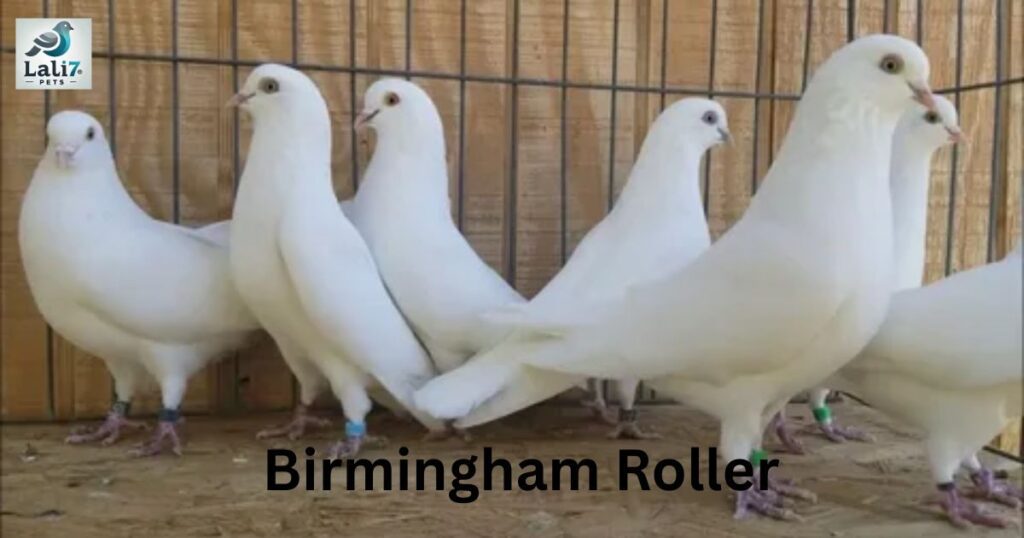
- Birmingham Roller: If you want performance, this is the gold standard. They are the athletes of the pigeon world.
- English Long-faced Tumbler: These are often “clean-legged” (no feathers on feet) and are popular exhibition birds.
- Iranian Highflying Tumbler: As the name suggests, these birds fly at incredible altitudes and have great endurance, often staying airborne for hours.
- Komorner Tumbler: Known for a specific crest of feathers on the head, originating from Austria/Hungary.
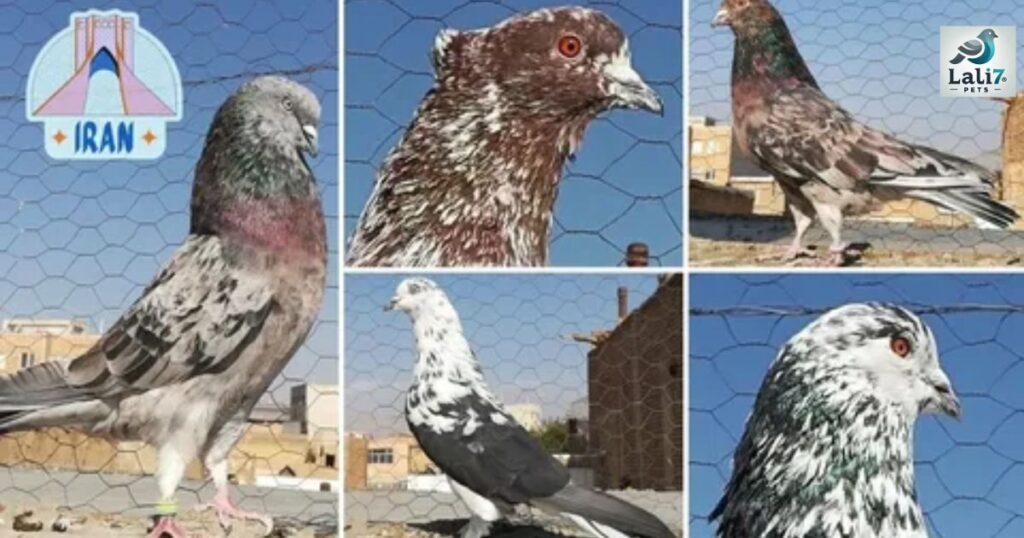
For more details on breed varieties, TumblerPigeons offers extensive profiles on global types.
Physical Characteristics and Temperament
While body types vary, most tumbler pigeons share a few common physical traits. They generally have a compact, athletic build suitable for maneuvering. You will often see a round head with a forehead that protrudes slightly more than a common city pigeon.
Key Physical Features:
- Beak: Short to medium length.
- Neck: Typically thick and strong.
- Eyes: Pearl or white eyes are preferred in many breeds.
- Colors: They come in every color imaginable—blue bars, checkers, reds, yellows, whites, and splashes.
Temperament: Are They Friendly?
One of the best things about tumbler pigeons is their personality. According to Roys Farm, these birds are known for being friendly, social, and gentle.
- Bonding: They form strong bonds with their keepers. I once knew a breeder named Old Man Miller whose Birmingham Rollers would land on his shoulder the moment he entered the coop. They recognized him not just as a food source, but as a flock member.
- Docile: Their calm demeanor makes them excellent for beginners. They are rarely aggressive and handle confinement well, provided the pigeon loft is spacious enough.
How to Care for Tumbler Pigeons
Raising healthy birds requires attention to three pillars: Housing, Diet, and Hygiene. These birds are generally robust, but they rely on you for their well-being.
1. Housing: Building the Perfect Loft
Your birds need a safe, dry place to live. A pigeon loft is more than just a cage; it is their home base.
- Space: Ensure there is enough room for free movement. Overcrowding leads to stress and disease.
- Ventilation: Good airflow is critical to prevent respiratory issues, but avoid direct drafts.
- Perches: Provide plenty of perches. Pigeons do not like to sit on the floor.
- Protection: The loft must be predator-proof. Rats, raccoons, and cats are constant threats.
- Nesting Boxes: If you plan on breeding, dedicated nesting boxes are required for privacy.
2. Diet and Nutrition
You cannot feed performance athletes junk food. Dietary requirements for tumbler pigeons are specific.
- Seeds and Grains: The core diet should be a mix of high-quality grains. This includes wheat, barley, millet, milo, and peas (a great source of protein).
- Grit: Pigeons have no teeth. They need grit (small stones/crushed shells) to help grind food in their gizzard. This also provides essential calcium.
- Fresh Water: This is non-negotiable. Water must be changed daily.
- Supplements: During molting or breeding seasons, vitamins and minerals are helpful. Occasional chopped greens (lettuce, spinach) are a nice treat.
3. Health and Hygiene
Regular cleaning is the best defense against illness. Scrape the floor of the loft regularly to remove droppings. Keep the water containers sanitized. A clean loft equals happy, high-flying birds.
Breeding Tumbler Pigeons
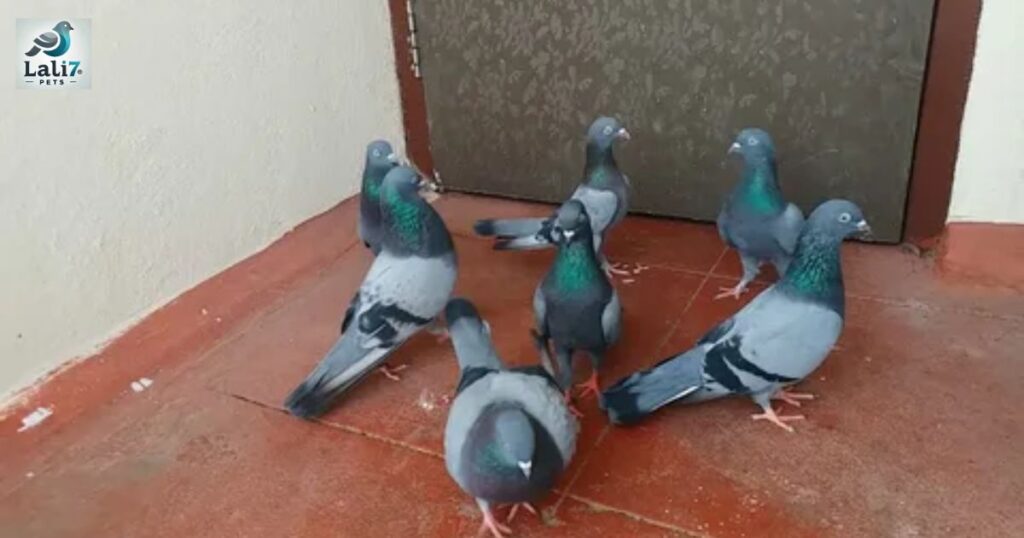
Breeding is one of the most rewarding aspects of the hobby. It allows you to refine traits and witness the cycle of life.
The Breeding Cycle:
- Pairing: Tumbler pigeons typically bond for life. Breeders select pairs based on performance or color.
- Eggs: The female usually lays two eggs.
- Incubation: Both parents take turns sitting on the eggs. The incubation period is approximately 18 days.
- Hatching and Feeding: When the squeakers (baby pigeons) hatch, the parents feed them crop milk. This is a special secretion from the lining of the parent’s crop, rich in fat and protein.
- Weaning: After about a week, parents switch to regurgitating softened grains. Chicks are usually weaned and ready to leave the nest at 4 to 6 weeks old.
For in-depth breeding guides, resources like pigeonmate can be very helpful.
Training and Competitions
For many, the thrill is in the flight. Pigeon competitions are held globally where birds are judged on the quality, speed, and depth of their tumble.
Training Basics:
- Kit Box: Performance birds are often kept in smaller boxes called “kit boxes” to encourage them to fly together as a team (a “kit”).
- Routine: Feed them after they fly. This teaches them that returning to the loft equals dinner. Never fly them on a full stomach.
- Observation: Watch for the birds that tumble too much (roll-downs) and remove them from the flying kit, as they can hurt themselves.
Whether you are interested in the American Flying Tumbler or the Turkish Tumbler, the training principles of consistency and routine remain the same.
Frequently Asked Questions (FAQ)
Q: What is the difference between tumbler pigeons and roller pigeons?
A: All Rollers are Tumblers, but not all Tumblers are Rollers. A “Tumbler” is the general family name. A “Roller” (like the Birmingham Roller) is a specific breed developed to perform fast, tight, multiple backward somersaults in a row.
Q: How long do tumbler pigeons live?
A: With proper care, a healthy tumbler pigeon can live between 6 to 15 years. Some have even lived longer in protected environments.
Q: Are tumbler pigeons good pets?
A: Yes. They are gentle, quiet, and can become quite tame. They are excellent for families and individuals who have limited yard space but want to interact with animals.
Q: Why do my pigeons tumble? Is it a seizure?
A: It is not a seizure. It is a genetic trait selected over hundreds of years. However, there is a condition called “roll down” where a bird cannot control the tumble and hits the ground; these birds should not be bred or flown.
Q: Do I need a massive yard to keep them?
A: Not necessarily. A compact, well-designed loft can fit in a small backyard. The sky is their exercise yard!
Conclusion
Tumbler pigeons are more than just birds; they are living history and aerial artists. From the distinct Budapest Short-faced Tumbler to the high-performance Birmingham Roller, there is a breed for every interest.
Whether you are captivated by their plumage colors, their gentle temperament, or the adrenaline of watching a kit perform a synchronized tumble, these birds offer a rewarding hobby. By providing a clean pigeon loft, a balanced diet of seeds and grains, and consistent care, you help preserve an ancient tradition of pigeon fanciers that spans the globe.